This post contains promotional/affiliate links.
Booking a Yomiuri Giants game at Tokyo Dome and trying to work out which seat to pick? This guide covers the seat categories specific to this stadium, based on attending games there in person — not a translated seating chart.
- The seat categories you’ll actually see on the ticket site, from behind home plate to the outfield
- Why one seat type you’ll see in photos almost never goes on public sale
- Lower deck vs. upper deck at this specific stadium
- Which side to sit on if you want to be with the home crowd
If you haven’t worked out how to buy the ticket itself yet, we cover that separately in our guide to buying NPB tickets, and the general seat categories that apply across most NPB stadiums in our NPB stadium seat guide. This article is the Tokyo Dome-specific version of that second guide.
Tokyo Dome at a Glance
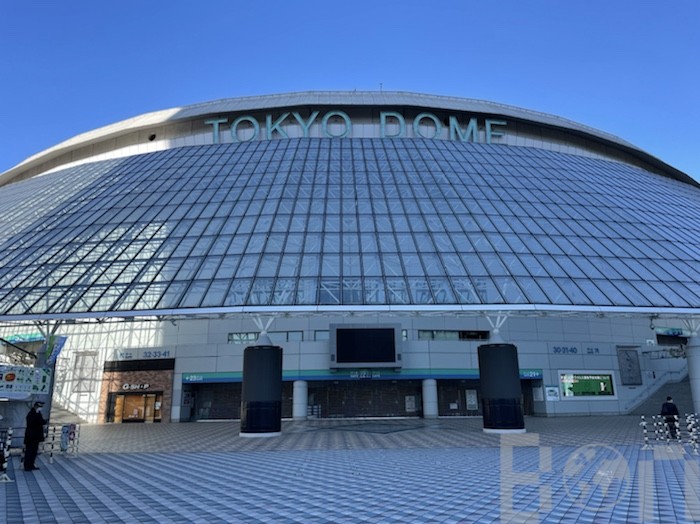
Tokyo Dome opened in 1988 as Japan’s first all-weather, multi-purpose stadium, with a roof design modeled on the Metrodome in Minneapolis. It became the first NPB ballpark to install long-pile artificial turf, in 2002. It’s the home of the Yomiuri Giants; the Hokkaido Nippon-Ham Fighters also played home games here until moving to Sapporo Dome in 2004. The stadium is about a 3-minute walk from either JR Suidobashi Station or Korakuen Station on the subway, so either works equally well.
The Seat Categories at Tokyo Dome
| Seat area | What it’s like | Good for | Price tier |
| Backstop (behind home plate) | Straight-on view of the pitcher, catcher, and batter; the rearmost rows have leather seating | Watching the game itself, not the show around it | Highest |
| Backstop Upper | Same sightline as backstop, one level up | A cheaper way into the same view | High |
| Infield | Along the baselines; includes sofa-style group seating and partitioned, cushioned family boxes in some sections | Traveling with kids or a group | Middle |
| Infield Upper | Same general area, one level up, full view of the field from the back rows too | Budget-conscious infield seating | Middle-low |
| Outfield | Standing cheering section; seats are tight together and legroom is limited | The organized chants, flags, and drums | Lowest |
The outfield wall is tall enough that blind spots are rare even from the center-field sections — the exception is right up against the foul poles, where the wall can clip part of your view. Lockers are available in the concourse behind the backscreen if you’re carrying bags into an outfield section, since legroom there is tighter than in the infield.
About the “Premium Lounge” Seats You’ll See in Photos
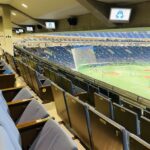
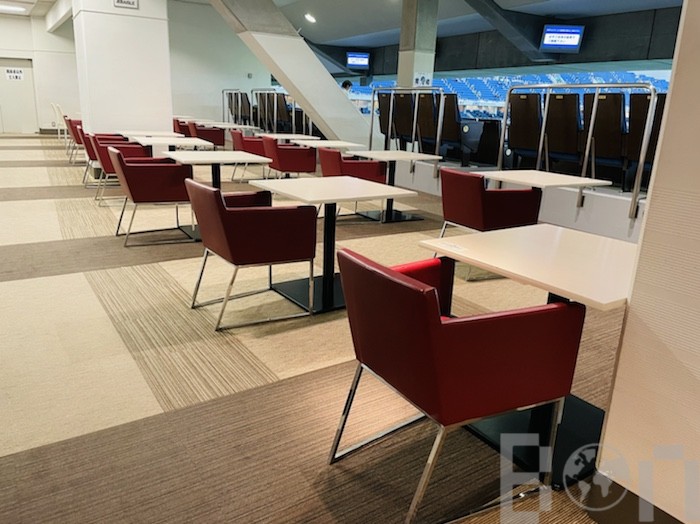
If you’ve seen photos of Tokyo Dome with leather armchairs, table service, and a buffet area level with the giant screen, that’s the Premium Lounge (formerly known as the Balcony Seats, renovated and rebranded in 2022). It sits between the lower deck and upper deck, close to the same eye line as the big screen.
The catch: this section is normally reserved for annual season-ticket holders and isn’t sold to the general public. It occasionally opens up for farm-team games or for games where another team is the home side at Tokyo Dome, but as a visiting tourist planning a regular Giants home game, don’t expect to be able to book it — the categories in the table above are the ones actually available to you.
Lower Deck or Upper Deck?
At Tokyo Dome the lower level (1”) and upper level are connected by stairs and freely walkable, so if you buy an upper-deck ticket you can still explore the lower concourse before the game. As with most stadiums, the upper deck trades some closeness to the field for a wider view and a lower price — a reasonable trade if you mainly want the atmosphere.
Home Side or Away Side?
The Giants’ dugout is on the first-base side at Tokyo Dome, and the home cheering section sits on the same side, in right field. If you’re rooting for the Giants, double-check you’re booking a first-base-side outfield ticket rather than the visiting team’s section on the third-base side — the seat map on the ticket site marks this even when the rest of the page is in Japanese.
What to Actually Prepare For
Because Tokyo Dome is fully enclosed, rain and sun aren’t a factor at all — no need to check the forecast, and umbrellas aren’t something you’ll need to think about either way. Multiple team shops are inside the stadium if you want merchandise, and the concourse can get crowded between innings, so it’s worth timing a food or bathroom run for earlier rather than right before a half-inning ends.
Staying Connected in Japan
Stadium Wi-Fi is patchy and e-tickets live on your phone. Airalo sells prepaid data eSIMs you install before you fly and activate on arrival — no SIM swap, no pickup counter. Data only, so it will not give you a Japanese phone number.
Summary
- Backstop and infield are the sightline-focused choices; outfield is where the chanting happens
- The leather-seat “Premium Lounge” you’ll see in photos is a season-ticket area, not something you can normally book as a visitor
- Home (Giants) cheering is first-base side / right field — check the seat map before buying an outfield ticket
Still need a ticket? Klook sells Yomiuri Giants tickets directly in English, or see our full guide to buying NPB tickets for every option. If you’re also sorting out where to stay for the trip, we cover that in a separate guide to hotels near Tokyo Dome.