This post contains promotional/affiliate links.
When is the best time to do the Shikoku 88 Temple Pilgrimage, the henro? In my experience the answer is spring or autumn, and the reasons are more specific than "nice weather." I did the whole loop twice by bike, once around Japan's Golden Week holidays in spring and once in September. This article covers what each season is actually like on the route, what to wear, and which pilgrim items are worth having.
- What each of the four seasons means for the pilgrimage, including the stretches that get hard
- Why Golden Week is worth avoiding, and how to work around it
- What to wear: no dress code, but a few choices make a big difference
- Which pilgrim items you need for the temple visits, and where to get them
Why the Season Matters More Than You'd Expect
Shikoku has a reputation for a mild climate, and in the cities that's fair. The pilgrimage route isn't only cities, though. It includes:
- long roads with almost no shade, some of them close to 100 km
- mountain paths of several kilometres where you may not meet anyone
- steep descents and long flights of stone steps
In the wrong season, these stretches go from tiring to dangerous. Many temples are on mountains, so the weather at the temple can be quite different from the weather in town. There's snow in the mountains in winter.
Spring (March to May): Fresh Green Everywhere
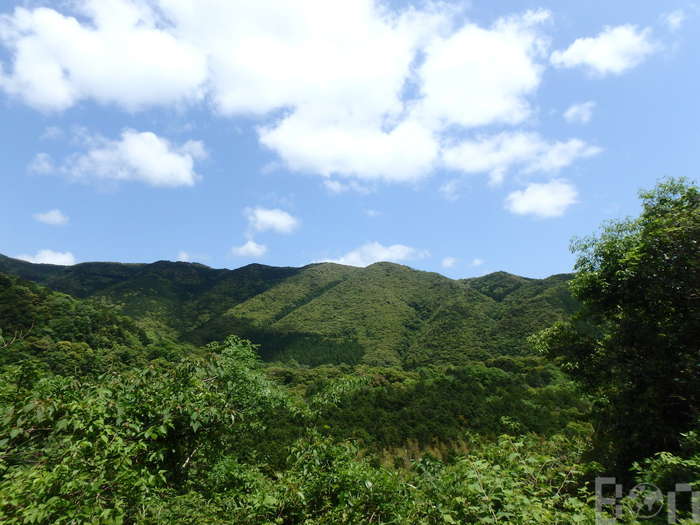
My spring ride was in late April. The temples and the roads between them were covered in fresh green the whole way, and the mountain temples were at their best. If you want to see the forests of Shikoku at their most alive, this is the season.
Temperatures are comfortable for walking or cycling, and you can do long days without the heat wearing you down. Spring is also the traditional pilgrimage season in Japan, so you'll meet more pilgrims on the road.
Golden Week: Plan Around It
Golden Week is a cluster of public holidays from late April to early May, when much of Japan travels at once. Shikoku gets busy too:
- Getting to Shikoku is the hard part. Flights, ferries and trains from Tokyo fill up. When I travelled from the Tokyo area, booking two to three months ahead felt like the safe margin.
- Famous temples and tourist spots are crowded. Well-known temples such as Zentsu-ji (Temple 75) were full of bus tour groups, and sights like Dogo Onsen were busy.
- City hotels fill up. Matsuyama, Imabari, Takamatsu, Kochi and Tokushima were the places to watch.
Mountain temples and hotels outside the cities weren't much affected. If you can move your dates a few days before or after Golden Week, you get the same season with far fewer people. If you can't, book your city stays early and keep the busy temples for weekdays.
Summer (June to August): Hot, Humid, and Hard on the Long Roads
June is the rainy season across most of Japan, and July and August are hot and humid. Shikoku is no exception. Shimanto in Kochi has recorded some of the highest temperatures in Japan.
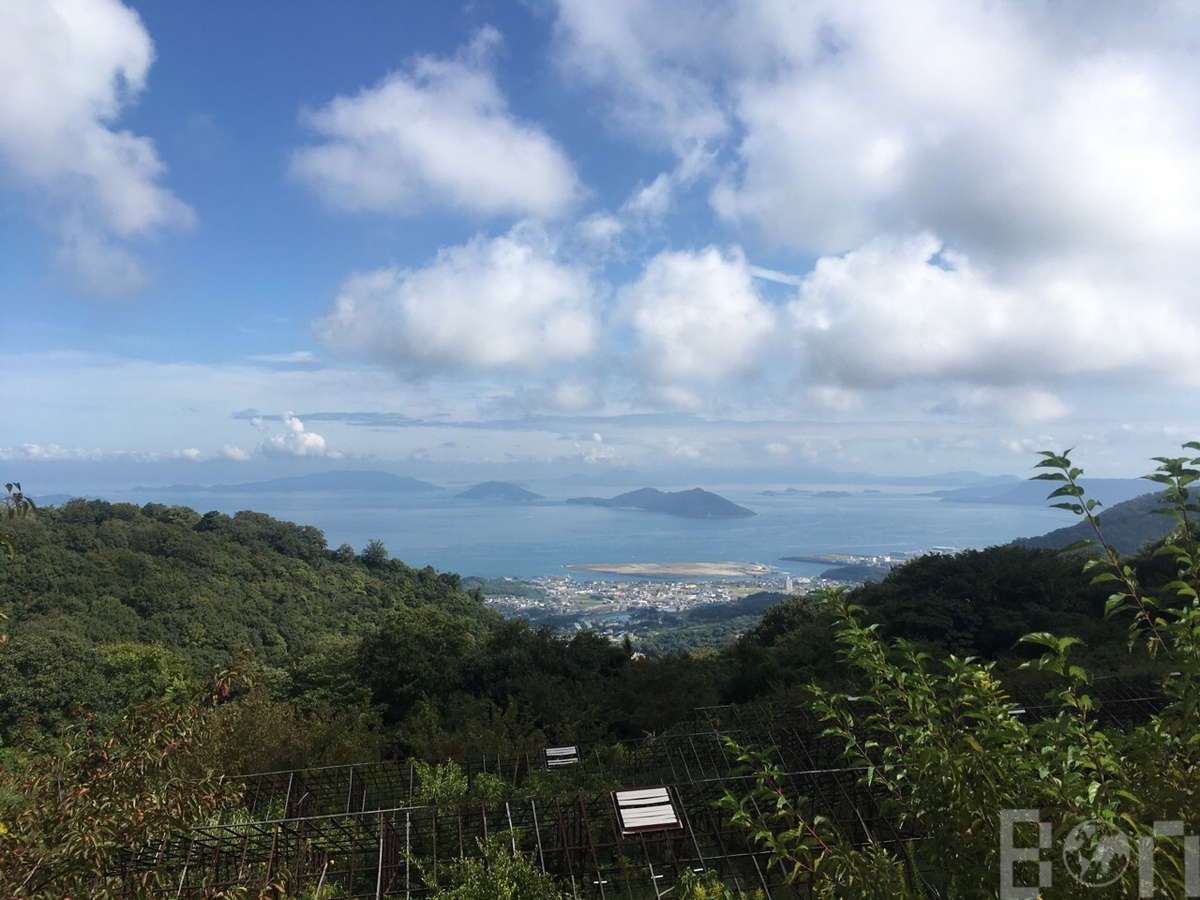
On a summer pilgrimage, water becomes a safety issue. The long stretches with no shade are the ones to avoid. I wouldn't plan a full loop in summer. If summer is when you can travel, a better plan is to visit the temples near the coast and enjoy the sea at the same time. Shikoku has the Pacific on one side and the Seto Inland Sea on the other, with sights such as the Shimanami Kaido, Katsurahama beach and the Naruto whirlpools close to the route.
Late summer into autumn is also typhoon season. Check the forecast from the Japan Meteorological Agency before each leg.
Autumn (September to November): Comfortable Days and Autumn Leaves
My autumn ride was in September. The temperature was around 20°C most of the time, which was very comfortable, and booking places to stay was much easier than around Golden Week.
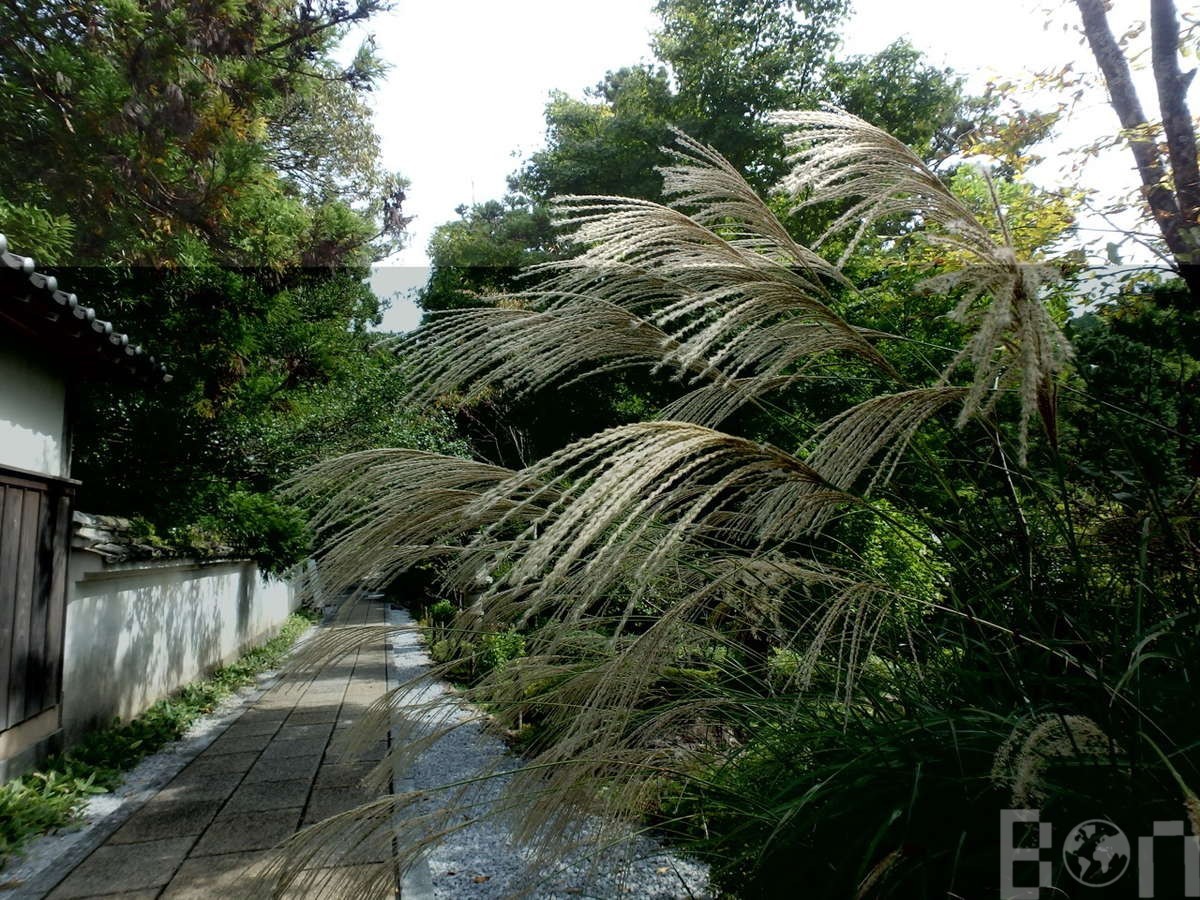
Later in autumn the leaves turn, and the mountain temples are beautiful. They're also popular. When the autumn colours peak, the ropeways up to mountain temples get busy, so allow extra time on those days.
Winter (December to February): Snow in the Mountains
Winter in Shikoku is cold enough for snow. In the mountains, snow and ice on the roads around high temples can make them hard or unsafe to reach, and a frozen mountain pass is dangerous whether you're walking, cycling or driving. Take particular care if you're thinking of going over the New Year holidays, or in January or February.
The regional road office of the Ministry of Land, Infrastructure, Transport and Tourism publishes live road cameras from around Shikoku. They're a quick way to see conditions before you head up (the page is in Japanese): Shikoku road cameras »
In winter, the safer plan is to visit temples on the flat near towns, one section at a time. Japanese pilgrims call doing the route in sections kugiri-uchi, and it's a normal way to do the pilgrimage.
So When Should You Go?
Putting the four seasons together:
- Spring is the best time if you want fresh green. Shift your dates a little to avoid Golden Week if you can.
- Autumn is the best time if you want autumn colours. From mid-September into October is a good window.
- Summer works for coastal temples, but not for the long shadeless stretches.
- Winter works for temples on the flat, but not for the mountain temples.
I did the full loop in both spring and autumn and enjoyed both. Choose by when you can take the time off, and whether you'd rather see fresh green or autumn leaves. If you're cycling, my guide to cycling the Shikoku pilgrimage covers the climbs and descents in detail.
What to Wear
There's no dress code. I assumed a pilgrimage would have one, but as long as you visit the temples with respect, you can wear what you like. I saw international pilgrims in jeans and sneakers with a large backpack.
In a city temple with a paved approach, everyday clothes are fine. But Shikoku's temples include mountain temples, and even temples on the flat often have long flights of steps. If you're visiting several temples a day, this combination works all year round:
- Top: the white pilgrim's vest or robe (hakui), if you want to dress as a pilgrim. More on this below.
- Inner layer: quick-drying fabric. If you sweat on a climb and then cool down in wet cotton, it drains your energy and makes it easier to catch a cold.
- Trousers: stretchy hiking trousers. Jeans got sweaty even in autumn.
- Outer layer: one windproof, waterproof jacket that breathes.
- Shoes: trekking shoes.
Shoes for Steps and Mountain Paths
Some temples can only be reached on foot by a mountain path, and many have hundreds of stone steps. Trekking shoes protect your feet on both, and I was glad of mine. If you're also going to Mount Koya, the same shoes will do for the Kumano Kodo trails nearby.
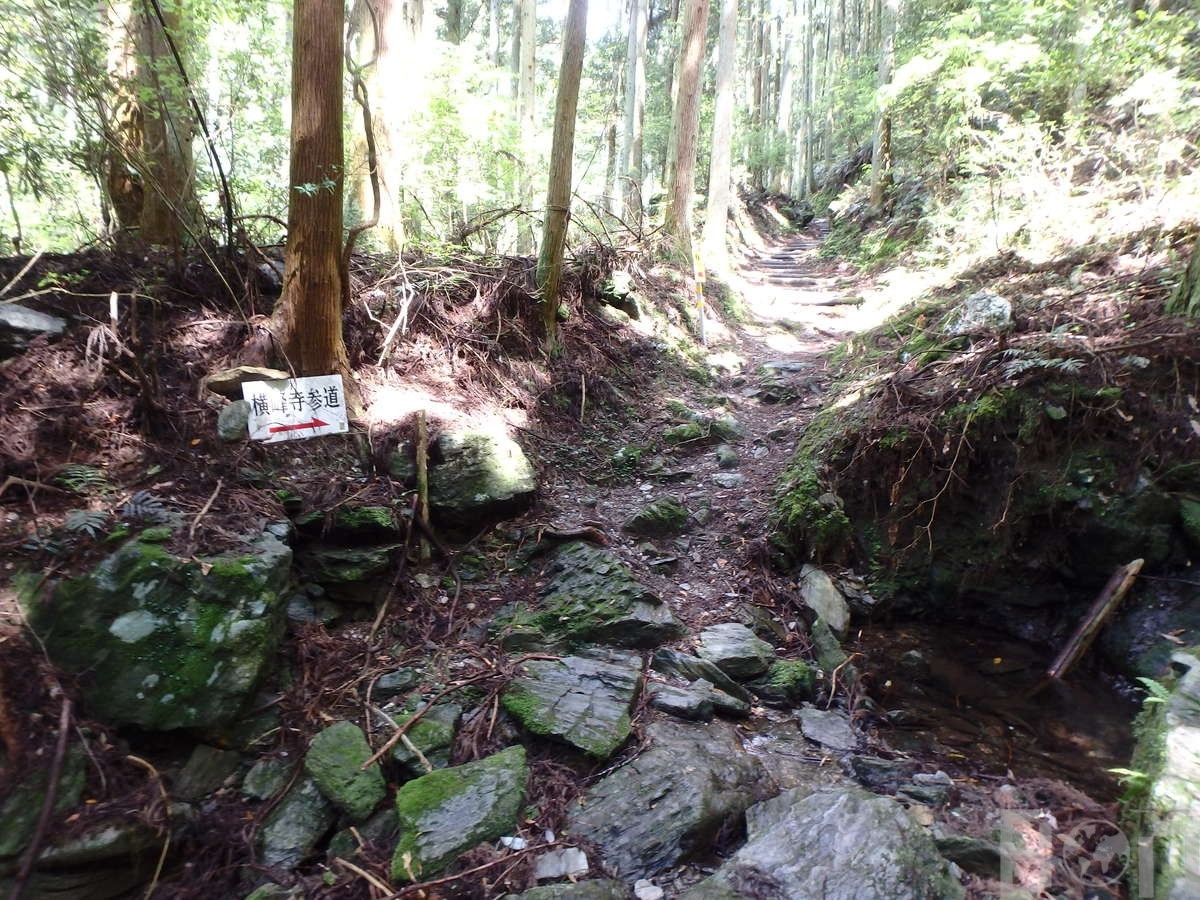
Rain and Cold at Height
On a long pilgrimage you will get rained on. Mountain weather changes quickly. Unpen-ji (Temple 66), the highest temple on the route, is in the clouds, and it's said to be about 7°C colder than the ground below.
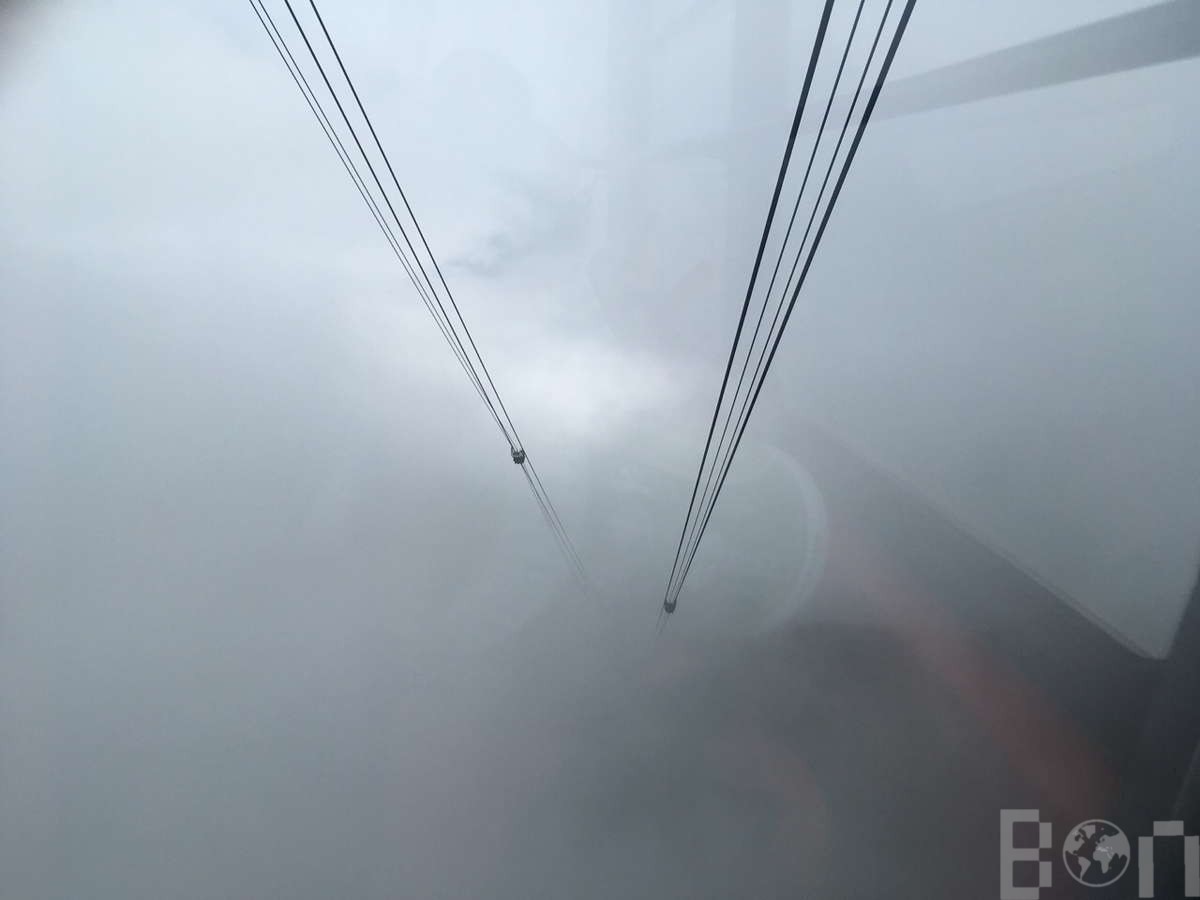
The Unpenji Ropeway goes up to the temple. The windproof, waterproof jacket is the piece I'd least want to leave behind. Make it one that breathes, because sweating inside a sealed jacket also makes you cold. Rain takes your body heat quickly. On a trip of several days, a better jacket, such as a Gore-Tex one, is worth the money. I took one on my bike pilgrimage.
The White Robe (Hakui)
The white hakui is the pilgrim's uniform. Wearing it is optional, but it makes it obvious that you're a pilgrim, and people along the way were much more likely to talk to me. Many pilgrims wear only the top half.
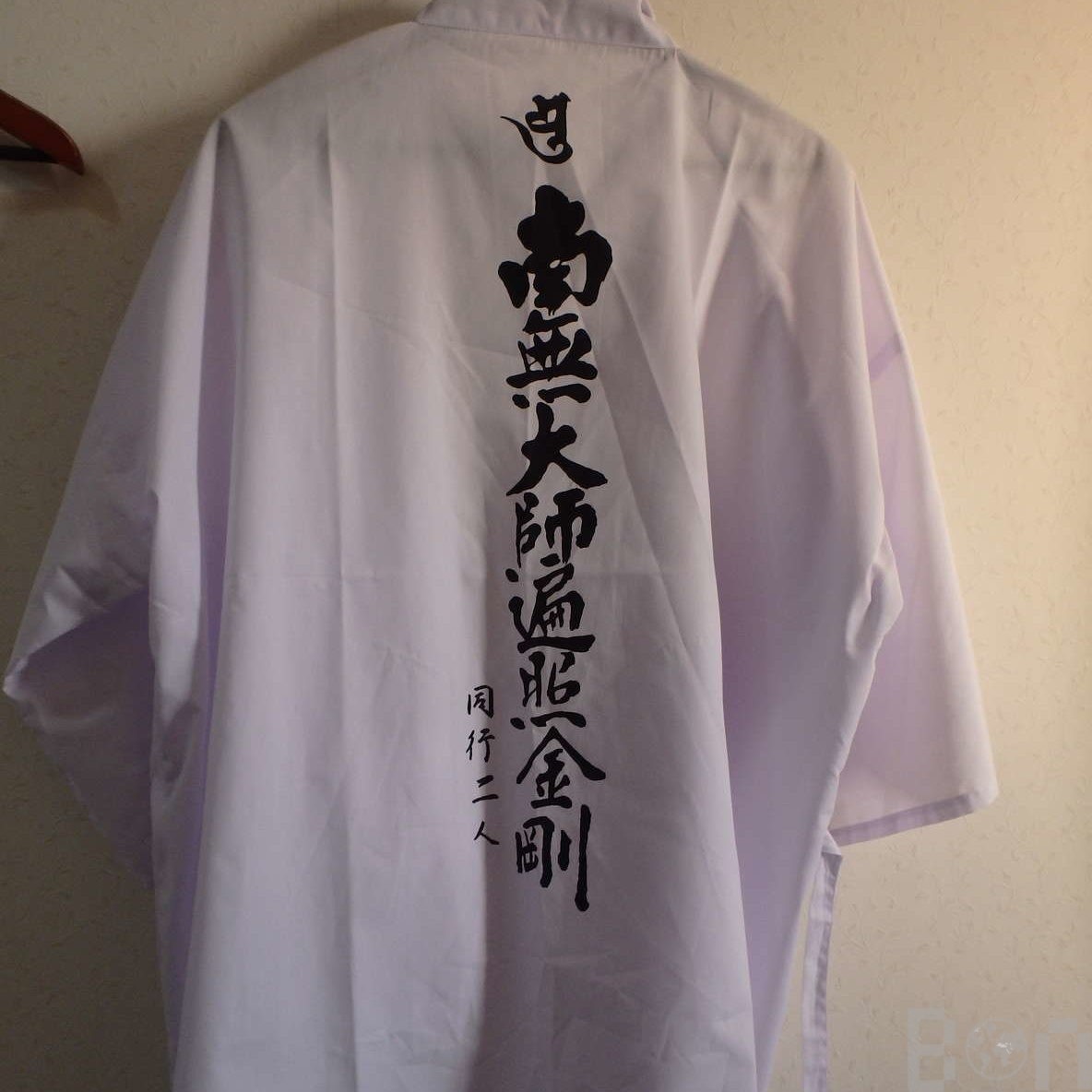
- Choose sleeves by season. I wore a sleeveless one around Golden Week and one with sleeves in September.
- Choose a fabric that dries quickly. You'll wear it for long hours and wash it often.
- The front pockets are useful for coins and small items.
- There's a separate type for collecting stamps. Some pilgrims have each temple stamp a robe instead of a book. This is a hanne, and it isn't the robe you walk in.
The Sedge Hat and the Staff
The sedge hat (sugegasa) and the wooden staff (kongo-tsue) are the classic image of a Shikoku pilgrim. The hat keeps off sun and rain, and you can keep it on inside the temple grounds. The staff helps a lot on steep approaches. Once I used a staff that locals had left for pilgrims to borrow, and it made a real difference to my legs. Both are bulky when you aren't using them, though. If you're cycling, skip the hat: another cycling pilgrim told me that on long descents the wind catches it and strains your neck.
Pilgrim Items: What You Need and Where to Get It
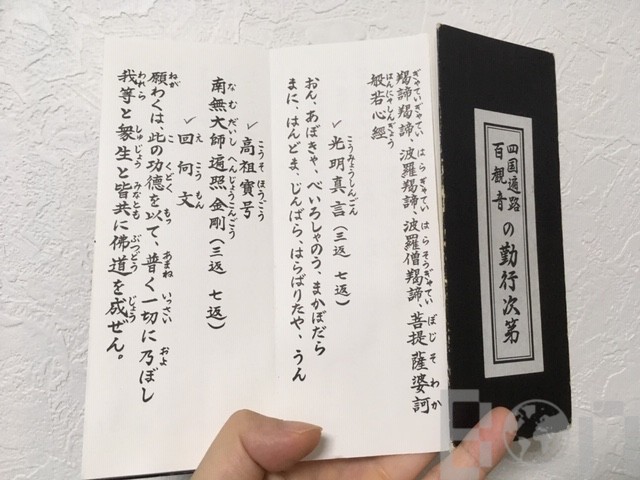
For the temple visits themselves, these are the items I'd call essential. With these plus a white robe, I did the whole pilgrimage without missing anything. How to use them at each temple is covered in my guide to Shikoku pilgrimage temple etiquette.
- Sutra book (kyohon). The text you read at each temple. Get one made for the Shikoku pilgrimage. Japanese pilgrims new to it choose one with the readings printed beside the characters.
- Stamp book (nokyo-cho). Each temple's calligraphy and seal go in here. Use a book made for the purpose; notebooks and loose paper may not be accepted. It's the record of your whole journey, so it's worth choosing one you like.
- Name slips (osamefuda). You leave one at the Main Hall and one at the Daishi Hall of each temple, so the full 88 temples take 176. They're also what you give in thanks when someone offers you osettai, a small gift to a pilgrim. They usually come in packs of 100, so get two.
- Prayer beads (juzu). Any prayer beads are fine, including those from another Buddhist school. I used a set I already had.
Optional extras:
- Stole (wagesa): a simple stole worn around the neck inside the temple grounds. Almost everyone on the bus tours wore one. Any colour is fine.
- Candles and incense: used at both halls of each temple. If you're walking or cycling, buy them as you go to save weight and avoid snapped incense sticks.
- Pilgrim's shoulder bag (zudabukuro): designed for the pilgrim items. Any bag is fine, though. A backpack you're used to is often the more comfortable choice on a long trip.
Where to get them: you don't need to bring any of this from home. Temple 1, Ryozen-ji, has a large shop for pilgrim goods, and many pilgrims buy their full set there on the first day. Many other temples sell the basics, so if you forget something you can pick it up along the way. Shops also sell starter sets with the stamp book, name slips, sutra book, bag, stole and robe together. If you don't want to choose each item, a set is the simplest way to start. One thing to do before you set off: name slips have spaces for your name and other details, and filling in 176 of them takes time. Do it on the ferry or the night before, not at the temple.
Practical Notes for International Pilgrims
- Cash: the temple stamp offices, small shops and family-run inns along the route often take cash only. Carry enough, and top up at convenience store ATMs in towns.
- Laundry: pack for washing as you go rather than for a clean set every day. This is another reason quick-drying fabric pays off.
- Staying connected: mobile data matters more than usual for maps, weather and road cameras. Signal can drop on mountain paths, so keep an offline map as a backup.
Where to Stay
If your trip overlaps with Golden Week, book city hotels early. These four cities are natural bases, one in each prefecture:
Hotels in Tokushima on Agoda »
Hotels in Matsuyama on Agoda »
Hotels in Takamatsu on Agoda »
For official information about the pilgrimage and the temples, see the Shikoku 88 Temple Pilgrimage association's English site.
Whichever season you choose, I hope this helps you plan your pilgrimage.