
This post contains promotional/affiliate links.
Planning to watch a J.League match on your trip to Japan? This guide is for visitors who don’t read Japanese and want a straightforward way to get a ticket — not just an overview of what match day is like once you’re inside.
- Where to actually buy a ticket, including English-language options
- Why some clubs are easier to book than others
- Which matches tend to sell out, and how early to buy
- A step-by-step walkthrough for booking from outside Japan
- What to do if the match you wanted is already sold out
This is based on first-hand experience booking and attending J1 and J2 matches at stadiums across Japan — not a translated press release, so where something varies by club or has changed, we’ve flagged it rather than guessed.
Where to Buy J.League Tickets
Unlike NPB baseball, where a shared handful of ticket vendors covers most teams, J.League ticketing is run club by club. That means the best starting point depends on which team you’re going to see.
Ticket Pia’s J.League English Ticket Portal
Ticket Pia operates a shared English-language “J.League English Ticket” portal that lists participating clubs and accepts international credit cards. It’s the closest thing to a single starting point for J.League tickets in English, though not every club sells through it.
Clubs That Sell Direct
A handful of clubs, including Kawasaki Frontale, sell tickets through their own official site instead of routing through Ticket Pia. If a club isn’t listed on the Ticket Pia portal, check that club’s own ticket page before assuming there’s no English option — and if there isn’t one, a browser translation tool (Chrome or Safari’s built-in translate) can usually get you through a Japanese-only checkout.
English-Friendly Ticket and Tour Services
Klook also lists J.League match tickets directly in English, with international payment support — for example, a Yokohama F. Marinos ticket at Nissan Stadium, though which clubs are on sale changes over time. If you’d rather not navigate a club’s ticket page at all, there’s also a
guided match experience with a local host, ticket included, if you’d rather have the logistics handled for you.
Buying at the Gate (Same-Day)
Ordinary league matches usually have day-of tickets available at the box office. We cover gate times and what match day looks like in more depth in our guide to watching a J.League match as a tourist — the short version for ticket-buying purposes is: don’t count on same-day box office for the games covered in the next section.
Priority Sales and Membership Windows
As with NPB, official club membership programs typically get an early access window before tickets open to the general public. As a visiting tourist you’ll almost always be buying in the general on-sale window rather than a members-only one — which is normal, but it does mean the best seats for a popular match can already be gone by the time general sales open.
Which Matches Sell Out First
Derbies, title-race fixtures, and matches against clubs with the biggest away followings — Urawa Reds and Kashima Antlers among them — are the ones most likely to sell out ahead of time. An ordinary midweek league match against a mid-table opponent is usually a safe same-day bet; a Saturday derby is not.
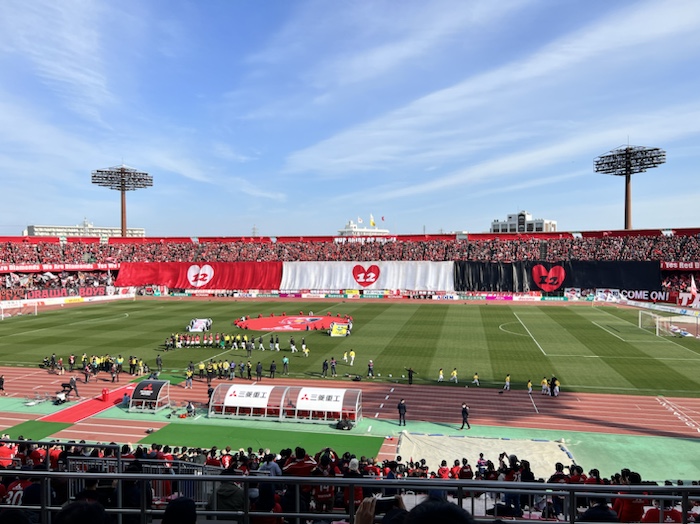
If your travel dates line up with one of these fixtures, buy as early as the site allows rather than waiting to see how the trip shapes up.
A Step-by-Step Walkthrough for Booking from Outside Japan
- Find your match: check the club’s official schedule (or the Ticket Pia English portal) for the date and opponent
- Confirm the sales route: Ticket Pia English portal, the club’s own English ticket page, or Klook — whichever the specific club uses
- Pick a seat category: reserved (main stand or behind-goal) for a guaranteed seat, or general admission if you want the supporter-end atmosphere
- Pay with an international credit card — all three routes above accept them
- Save your e-ticket or QR code to your phone; a printed copy works too if you’d rather not rely on your battery
None of this requires a Japanese address, a Japanese phone number, or reading Japanese — that’s the point of sticking to the English-language routes above.
If Your Match Is Sold Out
Fixtures don’t always cooperate with a travel schedule, and popular matches do sell out. If the game you wanted is gone, a couple of dedicated football museums fill the gap: the Japan Football Association museum tour at blue-ing! in Tokyo covers the national team and J.League history, and the
Hiroshima Soccer Museum covers similar ground with a regional focus. Either is a solid half-day if the fixture list doesn’t cooperate, or checking a different club’s schedule for the same trip window is usually easier than chasing resale for a sold-out derby.
Practical Notes for International Visitors
- A mobile ticket (QR code) or printed copy is all you need at the gate — no ID check beyond that in most cases
- If a club’s own site is Japanese-only at checkout, a browser translation tool is usually enough to get through it; the seat map and payment fields are visually similar across most Japanese ticket platforms
- Keep the confirmation email or screenshot handy as backup in case the QR code doesn’t scan cleanly on arrival
Staying Connected in Japan
Stadium Wi-Fi is patchy and e-tickets live on your phone. Airalo sells prepaid data eSIMs you install before you fly and activate on arrival — no SIM swap, no pickup counter. Data only, so it will not give you a Japanese phone number.
Summary
- Check the specific club’s Ticket Pia listing or official site first; Klook and same-day box office fill the gaps
- Derbies and matches against the biggest-drawing clubs sell out ahead of time — an ordinary midweek match usually doesn’t
- All three main routes (Ticket Pia English portal, club direct, Klook) accept international cards and need no Japanese address or phone number
Once you’ve got a ticket sorted, our guide to watching a J.League match as a tourist covers seating, match-day timing, and supporter etiquette in more depth. If baseball is also on your itinerary, we’ve put together the same kind of guide for buying NPB tickets. And if you want to go deeper on the chants themselves once you know a club or two, that’s something we cover in more depth elsewhere on this site.