This post contains promotional/affiliate links.
Trying to figure out which seat to book for an NPB baseball game? This guide walks through the seat categories you'll actually run into on a Japanese team's ticket site, based on watching games from most of them in person.
- The three main seat categories, and what each one is actually like
- Lower deck vs. upper deck, and dome vs. open-air stadiums
- Reserved vs. unreserved seating — a distinction that trips up a lot of first-time visitors
- Home side vs. away side, and family-friendly seating options
This is based on first-hand visits to NPB stadiums around Japan, not a translated seating chart — where something varies by stadium, we've said so rather than generalized.
The Three Main Seat Categories
Almost every NPB stadium organizes its seating into the same three broad zones, radiating out from home plate.
| Seat area | Distance from the action | Atmosphere | Typical price tier |
| Backstop (behind home plate) | Closest straight-on view of the pitcher, catcher, and batter | Quiet and comfortable — this is where you sit to focus on the game itself | Highest |
| Infield | Along the baselines, a good middle distance from the field | Relaxed but still engaged — some infield sections join in the cheering, most don't | Middle |
| Outfield cheering sections | Furthest from the infield, but right up against the outfield wall | Loud and organized — chants, flags, drums, and a cheer leader directing the section | Lowest |
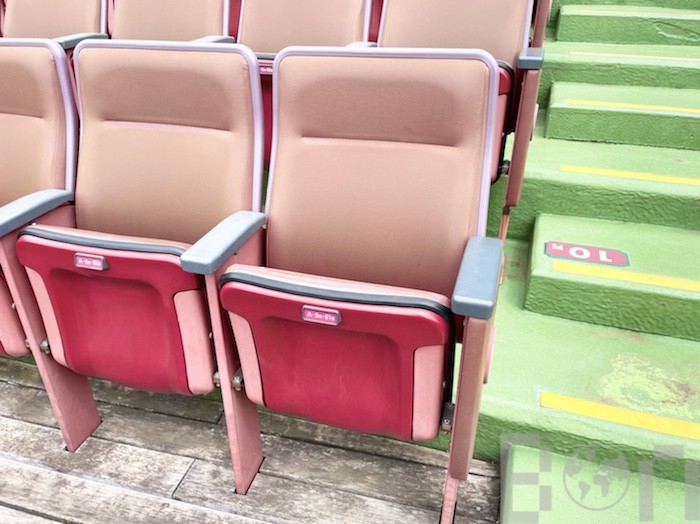
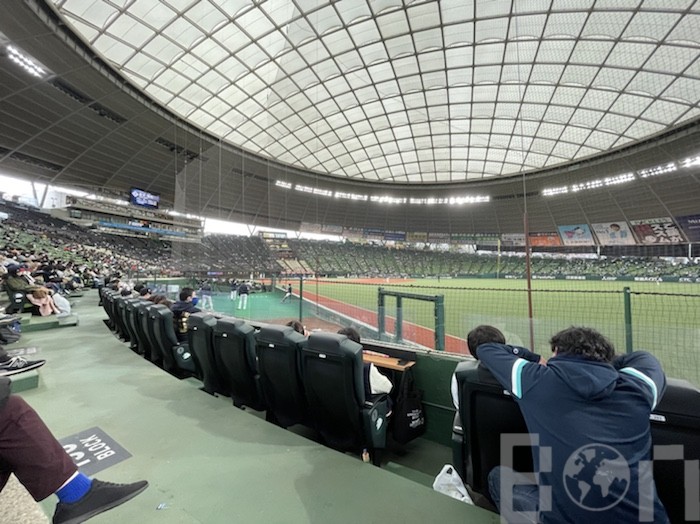

If you want to actually watch the game, sit infield or behind home plate. If you want the stadium-chant experience you may have seen in videos, the outfield cheering sections are where it happens — standing and singing along for most of the game is normal there, and some sections are standing-room only.
Lower Deck or Upper Deck?
Several NPB stadiums have two seating tiers, and it's worth checking which one a listing refers to before you book.
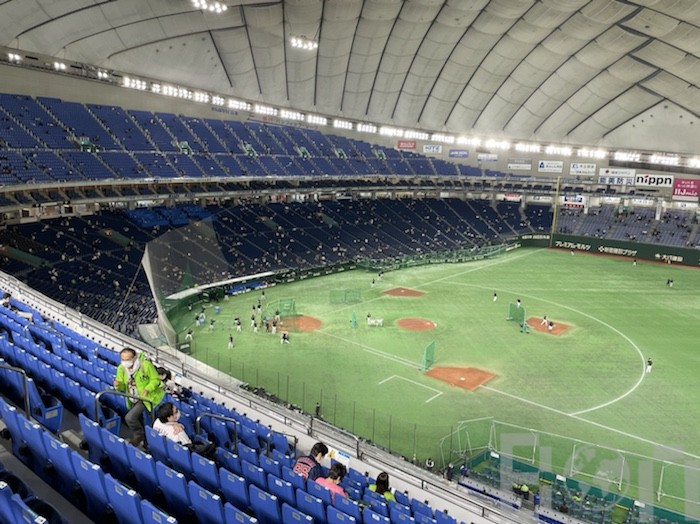
Lower-deck seats are closer to the field and usually cost more. Upper-deck seats trade some of that closeness for a wider, more panoramic view of the whole field — and they're typically the cheaper option in a given seat category. If you mostly want to soak up the atmosphere without paying for a premium seat, the upper deck is a solid choice.
Dome or Open-Air?
Whether a stadium has a roof matters more than it might sound like, mainly because of one rule: umbrellas aren't allowed at your seat during a game. (Tokyo Yakult Swallows games are a fun exception — small branded umbrellas are part of the official cheering routine there.)
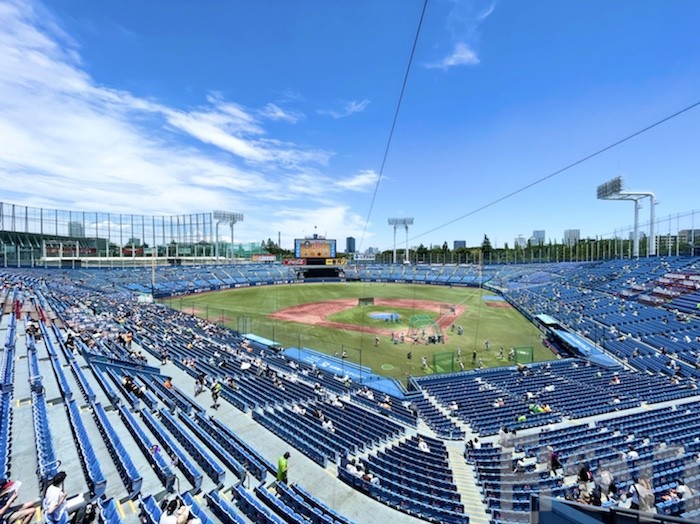
Dome stadiums — Tokyo Dome, Kyocera Dome, and Belluna Dome among them — remove weather from the equation entirely, rain or shine. At an open-air stadium, a day game means direct sun for hours, so sunscreen and a hat are worth packing, and it's worth checking the forecast before you go.
Reserved or Unreserved Seating?
Most NPB tickets today are for reserved seats (指定席, shitei-seki) — you're assigned a specific seat, so there's no need to arrive early. A shrinking number of sections, mostly in the outfield, are still sold as unreserved (自由席, jiyu-seki): any seat in that section on a first-come basis. If you're booking an unreserved ticket for a popular game, plan to be at the stadium a couple of hours before first pitch, or you may end up standing.
Home Side or Away Side?
This is the one that catches visitors off guard: outfield cheering sections are split by team, with home fans on one side and visiting-team fans on the other. If you're rooting for the home team, double-check you're not buying a ticket in the visiting team's section — the seat map on the official site usually marks this clearly, even if the rest of the page is in Japanese.
Family-Friendly and Specialty Seating
Beyond the standard categories, most stadiums also sell a handful of specialty seat types worth knowing about if you're traveling with kids or a group.
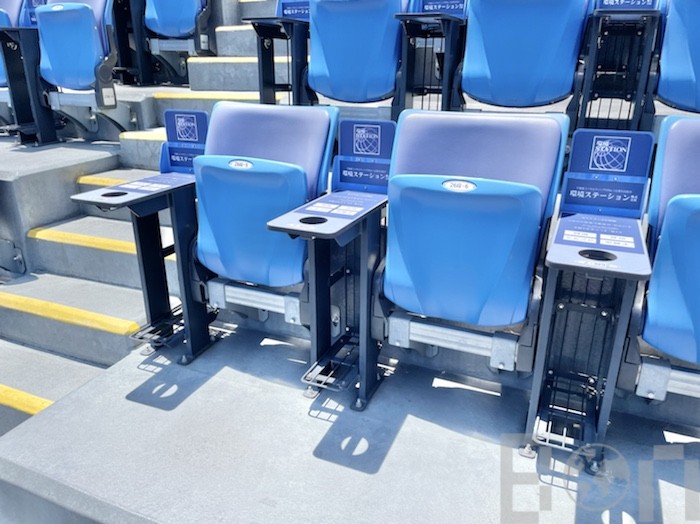
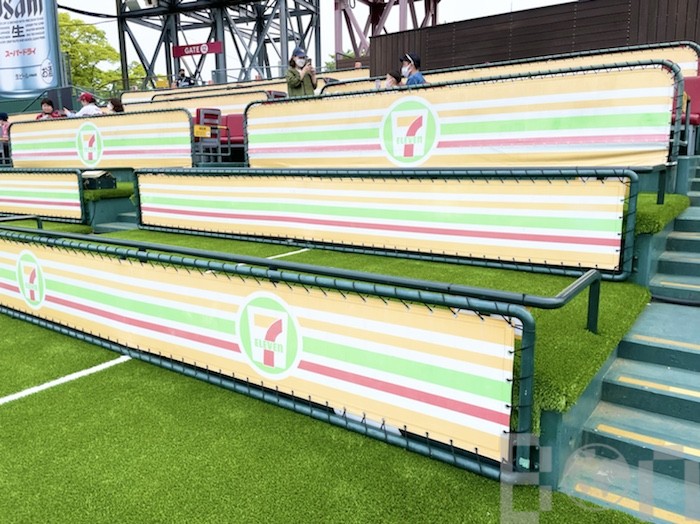
Table seats (pictured above) give you a small tray and cup holder, which is genuinely useful if you're eating a stadium meal during the game. Lawn or turf seating is common at outfield-adjacent areas and works well for families — kids can move around without disturbing anyone. Some stadiums also have a dedicated kids' play area or a nursing room near the concourse, which is worth checking for if you're traveling with young children.
How to Actually Pick a Seat
Once you know roughly what you're after, a few practical steps make the actual booking easier:
- Look for the seat map (シートマップ) on the official team site or ticket vendor page — even if the rest of the page is Japanese-only, the map itself is usually easy to read, and a browser translate tool fills in the labels
- Confirm home side vs. away side before buying an outfield ticket
- Exactly how a seat looks and feels can vary by stadium — a "lower deck" seat at one venue isn't the same view as another, so if you already know which stadium you're headed to, it's worth a quick search for photos from that specific venue
If the whole process feels like more than you want to deal with in Japanese, a guided match experience with an English-speaking host takes the seat-picking and ticket-buying off your plate entirely. Otherwise, Klook also lists
tickets for several NPB teams directly in English.
Summary
- Backstop = closest and quietest, infield = a balance of price and view, outfield = loudest and cheapest
- Upper deck trades closeness for a wider view and a lower price; a domed stadium removes weather as a factor entirely
- Double-check reserved vs. unreserved and home side vs. away side before you book — both are easy mistakes for a first-time visitor
Hopefully this gives you enough to pick a seat with confidence. If you haven't sorted out how to actually buy the ticket yet, we cover the purchase process — official sites, convenience-store kiosks, and English-friendly alternatives — in a separate guide to buying NPB tickets. And if you're curious about the chants, flags, and drums coming from the outfield sections, that's something we cover in more depth elsewhere on this site.